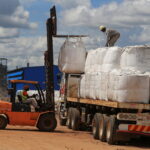
GOROMONZI – In the quiet, dust-laden district of Goromonzi, the Arcturus Mine stands as a towering monument to Zimbabwe’s lucrative gold industry. For decades, its deep shafts and sprawling open pits have yielded the precious yellow metal that fuels the nation’s economy. Yet, beneath the surface of this industrial success story lies a bitter legal and environmental struggle that has recently reached the highest corridors of judicial power.
The Environmental Management Agency (EMA), the state’s primary watchdog for ecological preservation, recently attempted to “crack down” on Arcturus Mine following a series of alarming inspections. The agency’s findings pointed to severe environmental violations, including the unlawful discharge of mine water into local natural waterways. However, in a move that has raised eyebrows across the country, the High Court of Zimbabwe stepped in to “halt” the EMA’s enforcement process. Justice Maxwell Takuva, delivering a ruling that has sparked intense national debate, warned of “catastrophic consequences” if the mine’s operations were allowed to remain suspended.
This judicial intervention has left many Zimbabweans asking a fundamental and troubling question: Why is a mine permitted to continue its operations if it is demonstrably damaging the environment? Is the law being wielded as a shield to protect “big business” and “economic interests” at the direct expense of “local communities” and the natural world? To understand the gravity of this case, one must look beyond the courtroom drama and into the complex web of ownership and political influence that defines the Zimbabwean mining sector.
The Inspection and the “Poisoned” Water
The current conflict trace back to an inspection conducted on 26 September 2025. Miriam Katupa, an EMA inspector, arrived at the Arcturus site to find what the agency later described as a blatant disregard for environmental standards. The core of the allegation involved the mine’s de-watering operations at the Ceylone Open Pit. According to the EMA’s reports, the mine was discharging water into a natural waterway without the necessary safeguards, leading to fears of “poisoned water” and “destroyed land” in the surrounding areas.
These environmental reports, which the EMA attempted to act upon through a stop-work order and a heavy financial penalty, paint a grim picture. In many gold-mining regions of Zimbabwe, such as Penhalonga and the Midlands, the discharge of untreated mine water often introduces toxic levels of mercury and cyanide into the local ecosystem. These chemicals do not merely vanish; they seep into the groundwater, choking riverine systems and posing a lethal threat to both livestock and human health.
Arcturus Mine, however, has vehemently defended its practices. The company, TN Gold Arcturus Mine (Pvt) Ltd, insists that the water being pumped out is clean underground water, which they describe as “comparable to borehole water.” They even pointed to the neighbouring Jongwe Farm, claiming that the farm had previously used this very water for irrigation purposes without any ill effects. Furthermore, the mine argued that its Environmental Impact Assessment (EIA) Licence, issued in 2024 and valid until July 2026, fully authorised its ongoing activities.
The “Catastrophic” Ruling
When the EMA issued its stop-work order, the mine’s management did not simply comply. Instead, they launched an urgent chamber application at the High Court, seeking to interdict the agency from enforcing the closure. The mine’s legal team, from the prominent firm Mtetwa & Nyambirai, argued that the EMA’s actions were “potentially ruinous.”
Justice Takuva agreed with the mining company’s assessment. In his judgment, he noted that the Ceylone Open Pit contributes approximately 70% of the mine’s total gold ore production. To stop de-watering, he reasoned, would lead to a rapid accumulation of water within the pit. This, in turn, would create an “attendant risk of wall collapse and operational paralysis.” The judge’s warning of “catastrophic consequences” was not merely a rhetorical flourish; it was a specific reference to the physical destruction of the mine’s infrastructure and the subsequent loss of its primary revenue stream.
|
Key Aspect of the Ruling
|
Justice Takuva’s Observation
|
|
Prima Facie Right
|
The mine has a right to operate under its valid 2024 EIA Licence.
|
|
Urgency
|
The risk of pit wall collapse and operational paralysis was “immediate and potentially irreversible.”
|
|
Internal Remedies
|
The EMA’s internal appeal process offered no mechanism to suspend enforcement, making court intervention necessary.
|
|
Balance of Convenience
|
The potential “catastrophic damage” to the mine outweighed the “temporary inconvenience” to the EMA.
|
The court’s decision to suspend both the stop order and the penalty has been seen by environmentalists as a major setback. It highlights a recurring theme in Zimbabwean law where “economic interests” are often given priority over “environmental protection.” The “catastrophic consequences” the judge mentioned weren’t just about the potential loss of jobs for the hundreds of workers at Arcturus—they were also about the significant “financial losses” that would be sustained by the mine’s elite owners.
The Power Behind the Gold
Our investigative look into the “ownership structure” of Arcturus Mine reveals some very “powerful names” operating in the background. The mine is owned by TN Gold, a subsidiary of the business empire controlled by Tawanda Nyambirai. A well-known lawyer and entrepreneur, Nyambirai is a former chairman of Econet Wireless Zimbabwe and has long been a significant player in the nation’s corporate landscape.
In Zimbabwe, the line between business and politics is often blurred. Recent reports from February 2026 indicate that Nyambirai has declared an “open bias” for President Emmerson Mnangagwa, even participating in public debates supporting constitutional changes that would extend presidential terms. Such high-level connections lead many to believe that “environmental protection” often takes a backseat when the interests involved belong to the “politically connected.”
|
Ownership and Influence
|
Details
|
|
Current Owner
|
TN Gold Arcturus Mine (Pvt) Ltd, owned by Tawanda Nyambirai.
|
|
Previous Owner
|
Metallon Gold (UK-based), owned by Mzi Khumalo; sold to TN Securities in 2017.
|
|
Political Stance
|
Nyambirai has publicly expressed support for the current administration and its constitutional proposals.
|
|
Legal Representation
|
Mtetwa & Nyambirai, one of the country’s most influential law firms.
|
This pattern of protection for “big business” is not unique to Arcturus. Across the country, Chinese-owned mining ventures and other large-scale operations have frequently been accused of bypassing environmental regulations. While the EMA occasionally manages to issue fines—such as the US$5,000 penalty recently levelled against a Chinese cement maker—these amounts are often seen as a mere “cost of doing business” rather than a deterrent. In the case of Arcturus, even this modest regulatory pressure was neutralized by the High Court.
Legal Gymnastics and the Spoliation Order
The legal battle over Arcturus Mine involved what some critics describe as “legal gymnastics.” One of the key arguments used by the mine’s lawyers was the concept of a “spoliation order”—a legal remedy designed to restore possession to someone who has been deprived of it without due process. While the court’s final order was an interim interdict, the underlying principle remained the same: the status quo must be preserved.
Justice Takuva’s ruling essentially bypassed the EMA’s regulatory authority by stating that the agency’s internal appeal process was inadequate. Because the Environmental Management Act does not automatically suspend an enforcement order when an appeal is filed, the judge felt compelled to step in. This creates a troubling precedent: any sufficiently wealthy mining company can now potentially bypass environmental regulations by claiming that an enforcement action would cause “irreparable harm” to their profits.
The “hidden details” of the EMA’s environmental reports, however, tell a different story. These documents, which the agency was trying to act upon, speak of a landscape where the “green” of the environment is easily forgotten once “gold” is involved. The reports detail how the discharge from the mine has altered the chemistry of local streams, making the water unsafe for the very “local communities” that the law is supposed to protect.
A Wake-up Call for Zimbabwe
The Arcturus case is more than just a dispute between a government agency and a private company; it is a “wake-up call” for every Zimbabwean. it shows that the systems designed to protect our natural heritage are fragile and easily overborne by the weight of gold and political influence. When a judge warns of “catastrophic consequences” for a mine’s walls but remains silent on the “catastrophic consequences” for a poisoned river, the priorities of the state are laid bare.
As the mine resumes its full-scale operations at the Ceylone Open Pit, the de-watering continues, and the water—whether “clean” or “poisoned”—flows once more into the Goromonzi soil. The “financial losses” of the elite have been averted, and the “economic interests” of the politically connected remain secure. But for the villagers who rely on the local waterways and for the land that must bear the burden of industrial waste, the protection of the High Court offers no comfort.
In the end, the story of the “Untouchable Mine” serves as a stark reminder that in the hunt for Zimbabwe’s riches, the environment is often the first casualty. The law, which should be a shield for the vulnerable and the voiceless, has instead been used to ensure that the gold keeps flowing, regardless of the ecological price. The question remains: how much more of our “green” will we sacrifice for the sake of the “gold”?
Timeline of Events:
- December 2017: Tawanda Nyambirai’s TN Securities acquires Arcturus Mine from Metallon Gold.
- July 2024: Arcturus Mine is issued an Environmental Impact Assessment Licence, valid until July 2026.
- 26 September 2025: EMA inspector Miriam Katupa conducts an inspection and issues a stop-work order and penalty for unlawful water discharge.
- February 2026: Tawanda Nyambirai publicly declares support for President Mnangagwa’s constitutional changes.
- 25 February 2026: Justice Maxwell Takuva of the High Court grants urgent interim relief to TN Gold, suspending the EMA’s orders.
- 7 March 2026: Violent attacks reported at legal firms resisting constitutional changes, highlighting the tense political climate surrounding the elite.

Follow @MyZimbabweNews